A Challenging Day
May 15, 2014
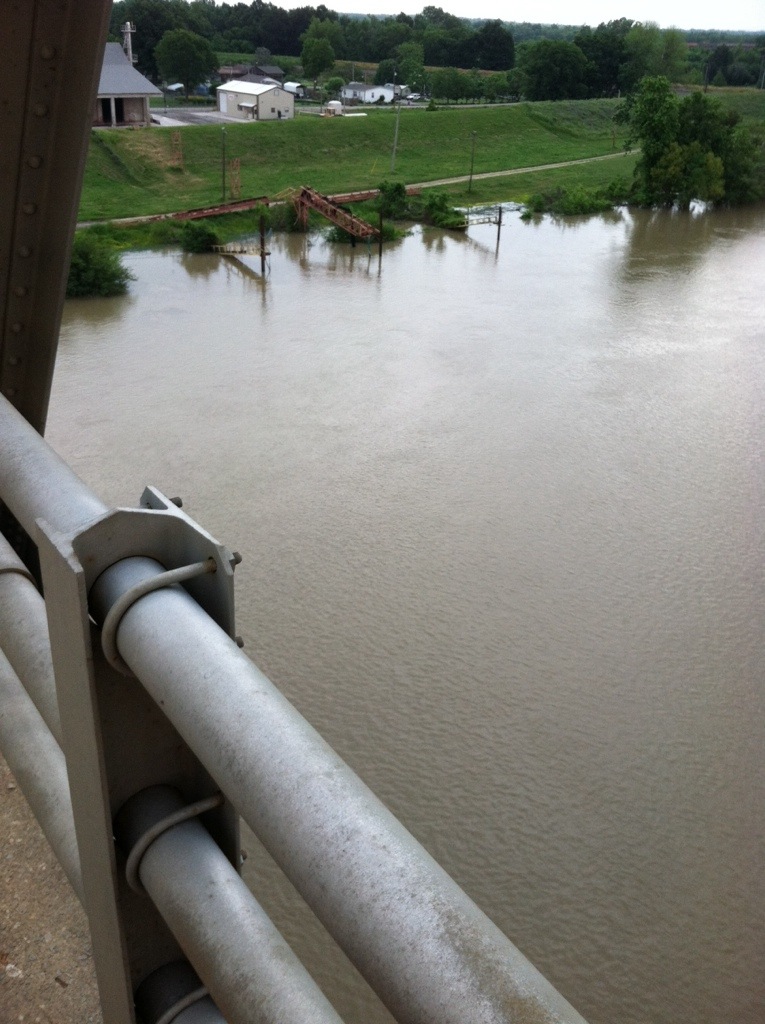
Day 3 of my journey began in the rain. Actually it began with Eddie Schieffler’s coffee. It was critical for me to get hyped up on coffee in order to set out in the rain. It was a steady rain — meaning hard rain, and it stayed with me for the entire trip to Lula, MS. As I crossed that rather narrow bridge over the Mississippi River under those conditions I found myself wondering what Sharla was thinking when she agreed to marry me.
The rain diminished on the road to Sardis, but the northerly wind picked up and the hills appeared. It was during that ride that I found a new use for the coffee from the Lula Visitor Center that I had put in my insulated water bottle — I squirted it on my cold fingers.
I was feeling good when I stopped in Sardis. I felt like I had two thirds of the days miles behind me. It was a pleasure to meet my fellow traveller, Lars from the Netherlands, who had ridden a motorcycle from Nicaragua. It was nice to spend some time visiting. That’s also where I met Metcal who worked for his nephew cleaning the convenience store. Metcal announced that he wanted a T-bone steak and a good wife. He also asked me if I could help him pay a ticket he owed in California. I declined the offer. I felt like there was a large storehouse of needs behind that one. And as I continued my ride I found myself dwelling on the difference between troubles and challenges.
My day was filled with challenges and I don’t think I could have dealt with any additional ones. But I’ll take a day full of challenges anytime instead of a bundle of troubles. I had challenges — Metcal had troubles. I have the leisure to take a challenging trip, and I feel very fortunate in that regard. If I had troubles I would be at home trying to figure out how to pay the bills or fix whatever significant life problem was defining my reality.
I’m too tired to document the challenges I faced after Sardis, and I hate that my late arrival in Oxford created anxiety in the hearts of the people I love, but I feel pretty proud of having ridden 90 miles today in the rain and wind and over hill after hill. I also feel exhausted.
I hope you find yourself dealing with more challenges than troubles!
Another Great Day!
May 14, 2014
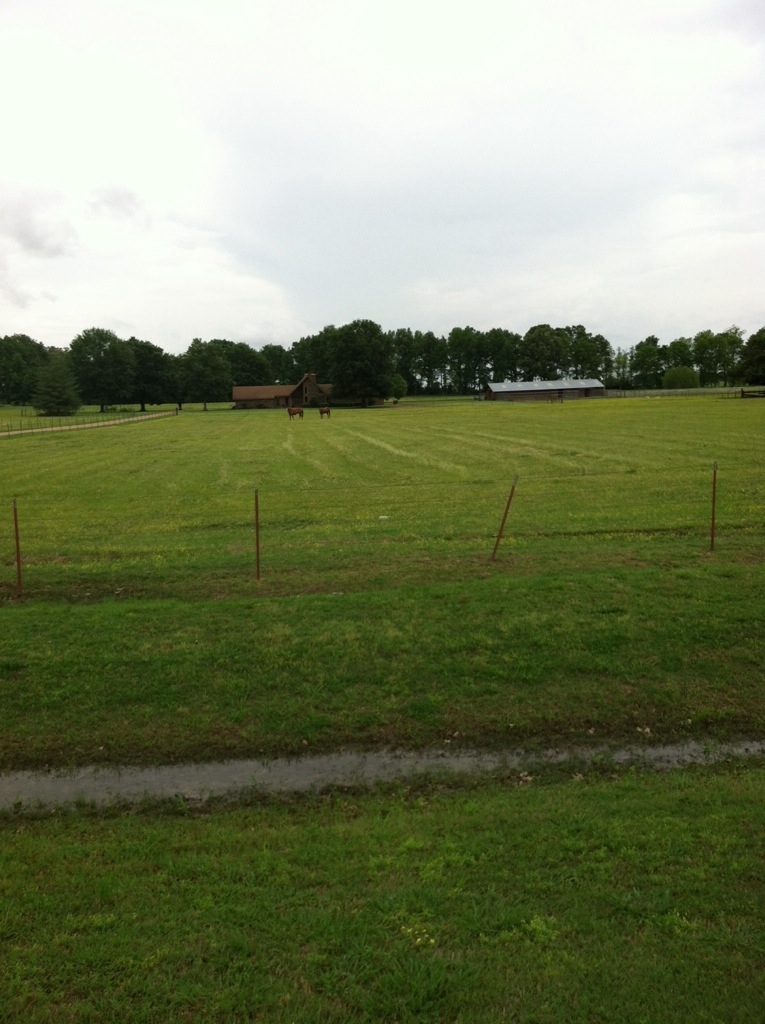
When I woke up to see pouring rain I wasn’t so sure what to expect, but it had stopped by 10am and that’s when I was ready to leave Clarendon. The riding conditions turned out to be ideal. The clouds weren’t thick, but they were dramatic. The wind was either calm or at my back. The shoulders of the road were wide and smooth. The drivers of the cars were accommodating. It was an ideal day to be traveling on a bicycle.
It was only a 45 mile ride to get to West Helena. It was great to get to spend time with friends I made while I was the pastor of the West Helena UMC. Times are hard in Phillips Co., but there are some people doing good work. I would elaborate, but I’m exhausted and I’ve got miles to ride tomorrow.
I continue to be grateful for this opportunity to see the beauty of life on earth from one of God’s great creations — the bicycle.
A Beautiful Day!
May 13, 2014
I’m feeling like a kid on a new playground! I was accompanied from our house to the peak of the Clinton Bridge by my son, Lucas, where we enjoyed an early morning view of our fine city. I was also greeted at the Clinton Library by my friend Lynn Hamilton who wished me well.
It wasn’t an easy day, but it was a great day. The wind was wide open from out of the south and I was heading either east or south. If the wind can be compared to the spirit of God I can testify that it’s not so good to run perpendicular to it — much less against it! I hope I don’t have to meditate on that tomorrow.
Though the wind was was a problem — I enjoyed being out in it. My bicycle held up well, I encountered lovely people, and I was greeted by a small group of deer pouncing across a field and in to the bayou as I approached the old White River Bridge at Clarendon.
I may not be able to move in the morning, but I’m feeling great right now. I only have to go 45 miles tomorrow to get to Helen/West Helena where I will get to stay with friends. I’m a grateful and fortunate man!
And one more thing — congratulations to all of the same-sex couples who were able to get married today! I understand we have several newly married couples in our church and and I’m so happy about that. I look forward to the day when I can be a part of those ceremonies!
Easter 4a, May 11, 2014
May 12, 2014
Tonight is the eve of my bicycle trip to the Atlantic. I’m accustomed to posting the text of my sermon after each Sunday, and I don’t see any reason not to go ahead and do that again this week. I enjoyed working my upcoming trip in to my sermon, and whether it had any meaning for anyone else it spoke to me. I felt great support from the congregation in preparation for my trip. The blessing of my bike and and myself was a powerful experience for me. I’m packed up and ready to leave as soon as I can get myself out of bed in the morning. I’m carrying a heavy load, but there’s nothing I have that I want to leave behind. I’m not without some pain as I prepare to leave my normal and happy life, but I’m pretty excited to have an adventure before me and I am so grateful for everyone who has enabled this to happy. I’m a grateful man.
Here’s what I had to say in my sermon this morning:
Can I Herd You Now?
Psalm 23
23:1 The LORD is my shepherd, I shall not want.
2 He makes me lie down in green pastures; he leads me beside still waters;
3 he restores my soul. He leads me in right paths for his name’s sake.
4 Even though I walk through the darkest valley, I fear no evil; for you are with me; your rod and your staff– they comfort me.
5 You prepare a table before me in the presence of my enemies; you anoint my head with oil; my cup overflows.
6 Surely goodness and mercy shall follow me all the days of my life, and I shall dwell in the house of the LORD my whole life long.
I think it’s a nice convergence for the 23rd Psalm and Mother’s day to fall on the same day. We don’t immediately think of shepherds as being women, but I don’t think it’s a stretch to think of mothers as being shepherds. Of course if you are like me you don’t ever really think about shepherds until you read something from the Bible – which is full of this shepherding language. And I think most of us have a sense of what shepherding is all about. It’s about providing for the needs of creatures who need some guidance and protection.
I’m not a big fan of these special days. I think they are largely driven by commercial interests, and I imagine Mother’s Day probably generates as much pain and suffering as it does joy and happiness – maybe even more pain and suffering than it does joy. I think it often highlights the unmet expectations of many people. I don’t think the Cleavers were ever representative of standard homelife in the United States, but there has always been a good amount of deviation from that norm, and that’s not a bad thing. I think there are a lot of people who do the work of good mothers who have never had that official title.
I was amused to discover that the original advocate for our national day set aside to celebrate mothers actually became it’s most ardent foe. Theidea of Mother’s Day was promoted by a woman named Anna Jarvis who wanted to honor the type of work her own mother did to care for her and others in such a gracious way. Her mother had cared for wounded soldiers on both sides of the Civil War, and Ms. Jarvis wanted Mother’s Day to be a day that brought attention to the work mother’s did to take care of people – at home and in the world. She saw it as a day to honor the work of mothers to establish strong homes, public health, and world peace.
It was declared a national day by President Woodrow Wilson in 1910, but by 1920, Ms. Jarvis sought to have it rescinded because it had become so commercialized. She crashed a candymakers convention in 1923 and two years later she was arrested at a War Mothers Convention for disturbing the peace when she tried to disrupt the selling of carnations which had become the flower of choice for Mother’s Day. She was like Jesus overturning the tables of the moneychangers at the Temple.
I don’t know if Ms. Jarvis was a biological mother, but in my book she was a great and powerful mother. You might say she gave birth to a beautiful baby, she had great hopes for her child, and she fought to give it a good upbringing. I don’t want to carry the metaphor too far – it might indicate that she was an advocate of infanticide, but like a good mother, she was a person who lived to nurture the right thing and she didn’t back down in the face of overwhelming forces in order to protect her young.
I think there is a tremendous connection between a shepherd and a mother. If it wouldn’t turn in to a day where we all were to eat mutton, I’d be for eliminating Mother’s Day and Father’s Day and having a single day that we would call Shepherd’s Day. Because good mother’s and good fathers both do the work of good shepherds. They provide for our needs. They care for us. They protect us. They fill us with wellbeing.
I don’t guess there’s any Psalm that is more revered than this Psalm that we’ve read this morning, and it deserves the reverence it receives. It’s a beautiful expression of trust in the one who truly cares and provides for all of us. Reading this Psalm is a calming experience. I love to think of Jesus reading this Psalm, and this is a prayer that Jesus would have read. It’s a prayer that helped shape who he was. You might say he was a person who perfectly allowed God to be his shepherd, and he became the perfect lamb of God.
Jesus allowed God to lead him to green pastures and to still waters. He walked on righteous paths and through dark valleys, but he knew he was never alone. He ate in the presence of his enemies, his head was anointed with oil, his cup overflowed with his own blood, but goodness and mercy followed him all the days of his life, and he not only came to dwell in the house of the lord forever – Jesus presides over it.
I think this Psalm is a beautiful portrayal of Jesus’ life, and it can be a powerful guide for our lives as well. It’s here to remind us of who our God is, and how God can guide us. I think this Psalm contains some deeply soothing information for our highly stressed lives.
I’m not a particularly calm person. Some people mistake my slow reflexes for calmness, but that’s not the case. I’m highly reactive to situations, but I process information pretty slowly, so by the time I figure out that I need to scream everyone has left the room. So I’ve often been labelled as being laid back, but the truth is that I’m a bundle of slow moving nerves. I need to hear and absorb what this Psalm says.
I need to be reminded that I don’t just abide in a world that’s ruled by business. I need to remember that I’m not just a citizen of a nation and a state. It’s good for me to hear that I’m not just accountable to a bishop. I’m hearing this Psalm say that I’m primarily a creature with a shepherd – and it’s a good shepherd.
I’m so happy to hear this. I need to hear this. I’m not going on this trip because I know this to be true. What I know to be true is how many things I fail to get finished most days. What I know is what’s broken and how incapable I am of fixing those seemingly essential matters. What I see are the demands of this world to keep up, pay up, perform, and measure. What I want is to trust that regardless of what happens we all abide in the hands of a loving God, who leads us to green pastures and still waters.
I don’t expect to see the heavens open and the smiling face of God wink at me as I pedal eastward. I expect to be wondering what I was thinking when I decided it was a good idea to embark on this journey, but the truth is that it’s already been a good experience for me. It’s really good for me to be reminded that my little corner of the world won’t collapse when I step out of it for a few days. You wouldn’t think this would be a new concept for me, but it’s easy for me to think that I am the only shepherd, and it’s up to me to find the green pastures and still waters – to provide the comfort and to set the table. After all, it is all about me isn’t it?
Or maybe you think it’s all about you.
Actually it is all about all of us. It’s about the herd. There’s a message here for those of us who speak of the Lord as our shepherd – which is not an exclusive herd. As we say in the welcoming statement of our church, there are no inherent barriers to anyone who wishes to be a part of this herd. None of us have any idea how truly extensive this herd really is, but I don’t believe that the shepherd of this flock has much trouble finding enough green pasture to keep the herd fed. There’s plenty of food for this flock because we don’t take full advantage of those places our shepherd seeks to take us.
I’m not so pretentious to say that I’m being guided by the Lord to embark on this journey. It may well be my own egotistical longing to stand out from the herd that has propelled this undertaking, but regardless of what generated this trip I believe it will be a nourishing experience for my soul. As I mentioned earlier, it’s already been a powerful experience. I have this tremendous sense of gratitude for the permission I’ve been given to pursue this odd calling. I already feel so nourished and nurtured. I’ve had a lot of responses and they’ve all been good. I’ve been questioned, encouraged, advised, tutored and prayed over. It’s already been great – and I’m so grateful!
This church is like a good mother. And a good shepherd. It’s also like a green pasture and good water. It’s a source of comfort and protection and food and restoration. I have nothing but appreciation for what goes on here. I know there is more we can do as a church, and I trust that we can be guided and fed.
There are so many good images in this Psalm. It’s a Psalm we often turn to at critical moments in our lives. When the man who took care of my grandparents died in a tragic manner there was a meal following the funeral at one of the night clubs that Jr. was known to frequent. It was during the day, so it was empty of everyone but his family and my family and the women who prepared the meal. My mother had been involved in putting it together, so before we ate my mother got our attention and instead of saying a blessing or asking someone to say a blessing she suggested that we recite Psalm 23 together.
It seemed like a good idea. And we started strong, but we didn’t get far in to it before we got lost. We would have these uncomfortable pauses and then someone would think of another line or repeat one that we had already said. Someone finally got us going on the last line, but it was memorably awkward and funny. It somehow seemed appropriate for the occasion.
So in memory of my mother and because it’s such a beautiful statement of faith I’m going to invite us to recite Psalm 23 together. I like the way it’s translated in the Revised Standard Version of the Bible and that’s how I’m going to recite it. I’m going to step away from the microphone because I might end up leading you astray, but I sense that there are enough former Sunday School students in the room to keep it going. Please join with me – as well as you can.
The Lord is my shepherd …
Amen
Pondering The Journey
May 6, 2014

This is a picture of me contemplating the bicycle trip I’m planning to embark upon next Monday morning.
Easter 3a, May 4, 2014
May 5, 2014
The Unveiled Treasure
Luke 24:13-35
24:13 Now on that same day two of them were going to a village called Emmaus, about seven miles from Jerusalem, 14 and talking with each other about all these things that had happened. 15 While they were talking and discussing, Jesus himself came near and went with them, 16 but their eyes were kept from recognizing him. 17 And he said to them, “What are you discussing with each other while you walk along?” They stood still, looking sad. 18 Then one of them, whose name was Cleopas, answered him, “Are you the only stranger in Jerusalem who does not know the things that have taken place there in these days?” 19 He asked them, “What things?” They replied, “The things about Jesus of Nazareth, who was a prophet mighty in deed and word before God and all the people, 20 and how our chief priests and leaders handed him over to be condemned to death and crucified him. 21 But we had hoped that he was the one to redeem Israel. Yes, and besides all this, it is now the third day since these things took place. 22 Moreover, some women of our group astounded us. They were at the tomb early this morning, 23 and when they did not find his body there, they came back and told us that they had indeed seen a vision of angels who said that he was alive. 24 Some of those who were with us went to the tomb and found it just as the women had said; but they did not see him.” 25 Then he said to them, “Oh, how foolish you are, and how slow of heart to believe all that the prophets have declared! 26 Was it not necessary that the Messiah should suffer these things and then enter into his glory?” 27 Then beginning with Moses and all the prophets, he interpreted to them the things about himself in all the scriptures. 28 As they came near the village to which they were going, he walked ahead as if he were going on. 29 But they urged him strongly, saying, “Stay with us, because it is almost evening and the day is now nearly over.” So he went in to stay with them. 30 When he was at the table with them, he took bread, blessed and broke it, and gave it to them. 31 Then their eyes were opened, and they recognized him; and he vanished from their sight. 32 They said to each other, “Were not our hearts burning within us while he was talking to us on the road, while he was opening the scriptures to us?” 33 That same hour they got up and returned to Jerusalem; and they found the eleven and their companions gathered together. 34 They were saying, “The Lord has risen indeed, and he has appeared to Simon!” 35 Then they told what had happened on the road, and how he had been made known to them in the breaking of the bread.
It may be more taxing than a 7 mile hike, but bear with me as I take you on a journey back to the mid-seventies when I was a teenager with some really odd interests. I won’t mortify you with all of the directions my mind and body were inclined to go, but I had this odd fixation on learning how to live off the land. I wasn’t exactly what you would call a survivalist – I didn’t want to build up an arsenal, but I wanted to develop the skills of a back-to-the-lander.
Back in the 70’s there was this series of books entitled Foxfire, and those books described how to build log cabins, butcher hogs, smoke meat, make soap, and every other thing that people used to do before you could go get it all at the local trading post. It was an odd fascination that I harbored for a few years. I wasn’t totally committed to the cause – I enjoyed living in a house with a television, but I didn’t let the reality of life get in the way of what I intended to do when I became an adult. I imagined the lifestyle of a self-sufficient-hunter-gatherer-shepherd-farmer to be far more compelling than that of someone in sales or preaching.
So I collected all of the Foxfire Books, and I read Mother Earth News at the Cross County Library, but the most significant publication I came across was a book that was made famous by Johnny Carson on the Tonight Show. It was called Stalking the Wild Asparagus, and it was written by a man named Euell Gibbons. I don’t know how many jokes Johnny Carson was able to extract from what Euell Gibbons said you could eat. He went on about him the way David Letterman goes on about Gov. Chris Christie.
But I loved what Euell Gibbons had to say. His book described all of the wild foods you could find in various habitats and how to prepare them – along with a few anecdotes of when he discovered various wild delicacies. I didn’t find much of what he had to say to be easily accessible, but I actually did stalk some wild asparagus. Other than where it grows, there is no difference between wild asparagus and domesticated asparagus, and one interesting thing he said about wild asparagus is that you can often find it growing along railroad track levees.
There was a railroad track that ran behind my grandparent’s house, and I discovered that there was in fact some asparagus growing in places along that levee. I would have to walk about a quarter of a mile to find a dozen sprouts, but they were there, and finding an asparagus plant was like finding a hidden treasure.
They weren’t easy to find, but I never would have seen these plants if I hadn’t been alerted to watch for them. That was about the most success I ever had as a back-to-the-lander, but it was a good lesson for me to pay attention to what may be at hand.
I actually used those same plant stalking skills when Sharla was taking a class that required her to collect and identify 60 wildflowers over the course of a semester. That was no small task, but it provided a great mission for me. Sharla was my girlfriend at the time instead of my wife, and I’ll never forget how heroic I felt when I came across new wildflower specimens for her to identify. I spent weeks with my head down, but my spirits were high because I had a great task. I was in constant search for new blooms growing in ditches, forests, and fields. It’s actually quite amazing how many different wildflowers you can find when you are keeping an eye out for them.
And it’s equally amazing what we miss when we aren’t paying attention. Actually what those exercises in asparagus stalking and flower hunting identified for me is the way in which we can be oblivious to what is at hand or we can become sensitized to our surroundings. I’m guessing that we all are paying attention to something throughout each day, and it’s a good idea for us to be conscious of that to which we are giving our attention. I think we can give a lot of attention to things that don’t provide much satisfaction and we can miss the presence of the One who gives us true life.
I’m thinking of the way in which these disciples were unable to see who Jesus was as they walked along with him for seven miles. I think I walk at an average pace, and I go about 3 miles/hour. We aren’t told when Jesus joined these two disciples, but it seems they were with him for a good two hours before they realized who they were talking to. This story does highlight the way in which Christ comes to us when we recall the story of his life and death and we share bread and wine together, but I’m also conscious of the opportunity that was squandered prior to the breaking of the bread.
Jesus didn’t depart without revealing himself to these two travelers, but they weren’t exactly quick to pick up on who he was. I don’t want to be overly critical of who they were, but this story makes me want to be a bit more attentive to what’s going on. It may well be that they were somehow prevented from seeing who he was, but they don’t really come across as being quick to pick up on what was going on. He could have just shook his head and gone on when they arrived in Emmaus, and it seems that he started to do that, but they urged him to stay with them, and he did. This is the good news – Jesus doesn’t abandon us even when we don’t quite get it, but I think we are supposed to learn something from these disciples. And the message I’m hearing is that we need to pay attention to our fellow travelers.
I haven’t spent any time in the communities that were recently hit by the tornado. I feel so bad for the people who have lost their homes and their loved ones. I know there is a world of pain going on over there, but I also believe that people are having some vivid encounters with the living Christ. What I trust is that Christ does come to people in dark hours. Just as we see in this story of how Christ came to these two men who were in deep despair over the events that had transpired in Jerusalem, I believe Christ comes to us when our worlds get shredded and our hopes are dashed.
I’m guessing there are a lot of people who are finding more than cherished photographs and belongings in those piles of rubble – I dare say people are discovering the presence of Christ in the midst of that chaos. And if we are wise we will find ways to connect with them as well.
It’s not easy to want to be near to people who are standing in the rubble of life – whether it’s rubble caused by a tornado or those less dramatic but equally insidious forces of destruction that we encounter in life, but I think it’s in those places that we encounter the presence of the most redeeming love.
You don’t find wild asparagus growing along the sidewalk. It grows along the wooliest and most untended stretches of land that you will find running across the country. You can find a handful of wildflowers growing in the yard – at least in a yard like mine that isn’t very well controlled, but you’ve got to go out of your way to find a few dozen.
Jesus is never that far away from us, but I think we can oblivious to his presence if we aren’t paying attention to the places and the people Jesus was always known to be near. He became known to those travelers when he blessed and broke the bread, but he had been with them for hours.
We break and share this bread today trusting that he has risen and is with us. We have been alerted to his presence and our challenge is to step out of here today in search of his holy presence. Our mission is to go out as those who trust that we aren’t alone in this world and to share this good news with others – not just with our words but with all of our attention.
Jesus may very well be sitting in here right now – in fact I think we should assume he is in here right now because if we make that assumption we will be more likely to see his life-giving presence. His is a mysterious presence, but we have good clues as to where we might experience him. He is with us when we share and when we care for one another. This is what is required of us if we wish to see the holy treasure that’s in our midst.
Thanks be to God for the opportunity we have to search and to find.
Amen.
Easter 1a, April 20, 2014
April 21, 2014
The Biggest Bang Theory
John 20:1-18
20:1 Early on the first day of the week, while it was still dark, Mary Magdalene came to the tomb and saw that the stone had been removed from the tomb. 2 So she ran and went to Simon Peter and the other disciple, the one whom Jesus loved, and said to them, “They have taken the Lord out of the tomb, and we do not know where they have laid him.” 3 Then Peter and the other disciple set out and went toward the tomb. 4 The two were running together, but the other disciple outran Peter and reached the tomb first. 5 He bent down to look in and saw the linen wrappings lying there, but he did not go in. 6 Then Simon Peter came, following him, and went into the tomb. He saw the linen wrappings lying there, 7 and the cloth that had been on Jesus’ head, not lying with the linen wrappings but rolled up in a place by itself. 8 Then the other disciple, who reached the tomb first, also went in, and he saw and believed; 9 for as yet they did not understand the scripture, that he must rise from the dead. 10 Then the disciples returned to their homes. 11 But Mary stood weeping outside the tomb. As she wept, she bent over to look into the tomb; 12 and she saw two angels in white, sitting where the body of Jesus had been lying, one at the head and the other at the feet. 13 They said to her, “Woman, why are you weeping?” She said to them, “They have taken away my Lord, and I do not know where they have laid him.” 14 When she had said this, she turned around and saw Jesus standing there, but she did not know that it was Jesus. 15 Jesus said to her, “Woman, why are you weeping? Whom are you looking for?” Supposing him to be the gardener, she said to him, “Sir, if you have carried him away, tell me where you have laid him, and I will take him away.” 16 Jesus said to her, “Mary!” She turned and said to him in Hebrew, “Rabbouni!” (which means Teacher). 17 Jesus said to her, “Do not hold on to me, because I have not yet ascended to the Father. But go to my brothers and say to them, ‘I am ascending to my Father and your Father, to my God and your God.'” 18 Mary Magdalene went and announced to the disciples, “I have seen the Lord”; and she told them that he had said these things to her.
I’m so glad you’re here today for our Easter celebration! Because what we are talking about and celebrating today is not just a theological concept – it’s a working theory. Believing in the resurrection of Jesus Christ is like believing in gravity. You don’t really know how it works, but you know to work with it. Trusting in the resurrection of Jesus Christ from the dead can have as much impact on your daily life as regular hand washing. It will keep you alive and well – regardless of how sick you may become. If you can learn to trust that Jesus was brought back from the dead you are equipped to deal with anything that may come your way on any day. What we are celebrating today is the good news that we are living in a world that is cherished by God. It’s not a world that is unharmed by some evil forces that I don’t quite understand, but God is larger than those powers of darkness, and God has given us a sign of that truth.
Now I realize that the truth we are talking about today doesn’t come with any kind of evidence that would hold up in a court of law. Nobody thought to save any DNA samples from Jesus of Nazareth before he was crucified that we can match up with the man who Mary Magdalene initially mistook for the gardener. I’m sure somebody is working on the Jesus DNA project, but I don’t think they’re going to find anything. There may be some Jesus DNA out there – he freely shared all kinds of tears, saliva, and blood during his earthly ministry. He didn’t keep his DNA to himself, but if you are looking for that kind of proof of his resurrection you’re going to be waiting a long time.
All we really have are these stories of what Mary Magdalene and others encountered when they went to the tomb of Jesus on the first day of the week after his crucifixion – along with what we have experienced in our hearts and accepted in our heads. We don’t have proof of what transpired, but we do have a powerful working theory. And often a theory is good enough.
I want to talk about The Big Bang Theory for a moment – the scientific theory not the television show. I’ve never actually watched the show by that name – I know some people who love that show, and I’m sure there’s probably a sermon illustration to be found there, but I can’t speak to the wisdom of that show. I have, however, seen a few episodes of the new Cosmos series, so I feel equipped to speak with great authority on the origin of the universe. That show has provided me with a profound understanding of the Big Bang Theory.
And here’s the way I understand it. Before there was this universe as we know it that’s occupied with billions of galaxies – I didn’t really know what a galaxy was prior to watching that show, but I now know that a galaxy is a distinct gathering of billions of stars and other stuff that swirls around a nucleus and that there are billions of galaxies with who knows what else swirling around – and before there was all of this there was just this one mass of energy and stuff, and then it exploded. It exploded and it created all kinds of matter and light and gas. And the truth is that we are still moving away from the point of that initial explosion, but it’s been long enough for some stability to take hold. This is the essence of the Big Bang Theory.
Now in order to portray the amount of time that has transpired since that initial explosion of matter, the creators of the Cosmos series proposed imagining that the history of the universe has been packed in to one year. If you think of the big bang happening on the first second of January 1 and now as the stroke of midnight on December 31then each month represents a little over a billion years. Within this time frame our planet didn’t fall in to orbit around the sun until about mid-September of the year. And the first humans, as we know ourselves to be have only been around for about 2.5 million years ago, so we didn’t show up until about an hour and a half ago. And in this cosmic scale of time, Jesus would have been born about 4 seconds ago.
It’s a large picture to get your mind around. Speaking of this big picture in an Easter sermon would not have played out well for a preacher in Italy in the 1600s, and you may very well be wondering why I would speak of such things today, but my thinking is that what we are doing in worship today is to try to get a grip on the big picture of reality.
And I don’t find this big bang theory to be contradictory to my belief in God as the creator of the universe. I don’t consider the Bible to be a scientific manual. The Bible doesn’t answer the question of how the universe was created, it addresses the question of why it was created, and I understand it to say that the world was created in order to reveal the glorious loving nature of our God. It’s entirely believable to me that our God would have set the universe in motion with a big bang – that sounds to me like a good way to get it all going. It may well be that this is the second time God packed everything together before setting it off. It may have been the billionth time. These are questions that will be hard for us to answer.
But the mechanics of the universe don’t provide us with the answer to the most important question that we need answered. The most important question for us is why God does what God does, and I believe Jesus provided that answer for us. Jesus was the embodiment of God, Jesus was the embodiment of love, Jesus revealed the way in which God intends for this world to be, and Jesus was hated for doing this by those who wanted their own kingdoms to prevail. Jesus was killed by people who didn’t want the truth of God’s design for the world to be known. And that was a dark day for the world.
You would think that the God who is able to pack together all of the matter and energy of the universe into a single point before blasting it out in to every direction and dimension – you would think that this God would have been able to keep the savior of the world from being crucified in such a graphically horrible way. You would think that God would have spared the most righteous man who ever lived from suffering a painful and humiliating death. You would think God could have done this differently. Yes, this is what we would think, but God doesn’t want us to think like that. God knows how we are inclined to think and God wants us to think differently. God doesn’t want us to think the way to solve our problems is to overcome our enemies with overwhelming force, so God didn’t do what we would do, and God wants us to take note of what did happen.
God allowed Jesus to die, but God didn’t allow his death to be the end of the story. What we have is this story of resurrection. The story is that his followers didn’t find Jesus to be in the grave – they found him to be in their midst. And by doing this God didn’t just act in a way that would keep Jesus alive – God acted in a way that would provide us all with the courage and the grace to deal with death and everything else. God provided us with some information that can enable us to deal with whatever happens to come our way.
The big bang theory tells the story of how the world was set in motion, but an even bigger bang happened for us when Jesus came back to us from death. Because what this story reveals is the way God feels about our world. God doesn’t want this world to be ruled by the self-serving and heartless powers that so often take charge of our planet. But God’s kingdom won’t be established on earth through an act of conventional warfare. God’s kingdom is built on the power of self-giving and self-sacrificing love, and that’s what this resurrection story is all about.
To believe in the resurrection of Jesus is not just an act of suspending logic in order to belong to some kind of a religious club. Certainly there is an aspect of supernatural disruption to this story of Jesus being raised from the dead, and those who are able to believe this enjoy the fellowship of a beautiful community, but the really hard thing to accept about this story is what it calls upon us to do. It’s not just a story that challenges our intellectual capacities – it’s a story that challenges our interpersonal relationships. It’s a story that calls upon us to allow our lives to be ruled by love. It’s a story that dares us to believe that God really does rule the universe and to live as if we trust that the power of love will one day prevail.
That’s not an easy thing to believe, but if we will believe it we will find our way to abundant life. It doesn’t mean we won’t encounter suffering and death. It doesn’t mean that we will overcome the evil powers that seem to thrive so well on this planet, but it does mean that we have become citizens of a more cosmic community. To believe in the resurrection of Jesus is to believe that there is a world that is not ruled by the physical and biological and political boundaries of this planet but by nothing less than the mind of God. Our feet are on this planet, but our souls are invited to abide with God.
The Big Bang Theory is really interesting, and it’s very revealing of where we have come from, but the resurrection of Jesus Christ – what I am now calling the Biggest Bang Theory – compels us to think about where we are going. If Jesus was only born 4 seconds ago on the cosmic calendar then we are facing a brand new situation here on earth, and it’s exciting to think of what may happen over the course of the next few seconds. God has provided us with some powerful new information – and it matters what we do with it.
The good news is that we aren’t alone in this new endeavor. Jesus is alive and well, and we can be guided by his presence. In fact we can become his presence. This is our challenge – this is our opportunity! This is some information we are invited to incorporate in to our lives on a daily basis. Doing this will have a powerful impact on the people you encounter here on earth, and it will enable you to abide in the most lasting community that the universe will ever know – the kingdom of God – the one that will continue to abide even beyond the next big bang.
And thanks be to God for this. Amen
Palm Sunday Year A, April 13, 2014
April 14, 2014
What Now?
Matthew 21:1-11
1 When they had come near Jerusalem and had reached Bethphage, at the Mount of Olives, Jesus sent two disciples, 2 saying to them, “Go into the village ahead of you, and immediately you will find a donkey tied, and a colt with her; untie them and bring them to me. 3 If anyone says anything to you, just say this, ‘The Lord needs them.’ And he will send them immediately.” 4 This took place to fulfill what had been spoken through the prophet, saying, 5 “Tell the daughter of Zion, Look, your king is coming to you, humble, and mounted on a donkey, and on a colt, the foal of a donkey.” 6 The disciples went and did as Jesus had directed them; 7 they brought the donkey and the colt, and put their cloaks on them, and he sat on them. 8 A very large crowd spread their cloaks on the road, and others cut branches from the trees and spread them on the road. 9 The crowds that went ahead of him and that followed were shouting, “Hosanna to the Son of David! Blessed is the one who comes in the name of the Lord! Hosanna in the highest heaven!” 10 When he entered Jerusalem, the whole city was in turmoil, asking, “Who is this?” 11 The crowds were saying, “This is the prophet Jesus from Nazareth in Galilee.”
I want to address our new confirmands this morning. The rest of you are welcome to listen. In fact I encourage all of you to think of yourselves as a fresh new confirmands, and I want you to think about the crazy thing you have just signed up to do. And I hate to say it, but there’s really no turning back on this thing. You certainly can quit showing up for worship at some point in your life. There comes a time in life when nobody can make you get up on Sunday morning and clean yourself up enough to be seen by respectable people. You can quit trying to learn more about Jesus, and you can act like you’ve never met him, but I’m sorry to say that you really won’t be able to get Jesus out of your life.
You’ve already had too much exposure to him to forget you ever met. This is just one more thing you can blame your parents for doing to you – they introduced you to someone that’s going to hound you for the rest of your life. But it’s not all their fault, sometimes Jesus gets attached to people for no apparent reason.
A woman named Anne Lamott wrote a book entitled Travelling Mercies, and in that book she relates her rocky journey in to the Christian faith. Her mother took her to church on rare occasions, but her father thought Christianity was a joke. She was a very educated person, and she was working as a writer. She is very creative, and funny, and she was always a spiritually curious person, but she was sort of a mess of person. She had a serious substance abuse problem, she had family problems, she had job problems, she had relationship problems, and she had a serious medical problem. Occasionally she would seek solace in a small church near the houseboat she lived in in the San Francisco Bay. She was lured inside the church by this powerful gospel choir. She would show up on Sundays to listen to the music, but she always slipped out before the sermon.
She thought that was a safe amount of exposure to the church, but it wasn’t. I don’t really know what to think of this, but she came to feel that Jesus was following her around. She said he seemed to be like a cat. He wasn’t an imposing figure, but he was never far away. As I say, she had a medical problem that she was treating with pain pills and alcohol, and that may have contributed to her feeling that Jesus was following her around like a cat, but as she was laying in her bed one day in a terrible state of mind and body she said Jesus just remained crouched down in the corner of her bedroom. She sensed that he wasn’t going to leave her alone, so she finally gave up and decided to start following him.
The way she describes her journey into Christianity and in to a life of sobriety is much funnier and saltier than I can describe from the pulpit, but I think it’s a powerful testimony to the relentlessness of Jesus.
You just can’t shake him. Jesus can get inside your head and your heart and you just can’t live a normal life anymore. Before you know it you can’t just think about what you want to eat and drink and live and do. You hear Jesus putting all these other ideas in your head. You find yourself wondering if your neighbor has enough to eat and who’s checking on that person you don’t really know but who seems so sad. You can lose focus on your career, and get involved things that won’t earn you a penny. And if you really let Jesus in he’ll take all of your money. Most of us are able to draw the line before he gets that far, but you’ve got to keep watch – he’s powerful – he will take over if let him.
But it’s not so bad. Jesus creates some complications for us, but it’s only because he doesn’t want us to live dull flat lives. I’m sure he would be happy for us to latch on to easy and comfortable lives if we weren’t inhabiting a planet that is being held hostage by powers and principalities that have no regard for human rights or ecological sustainability. But this is the situation we are facing. This world is a mess, and Jesus needs some people like us to get in the way of the dehumanizing systems that are out there.
That’s what Jesus did when he was alive and walking around in ancient Israel. He was engaged in an epic battle with some of the evil powers of his day when he entered Jerusalem for the last time. And the way he decided to attack those powers was to engage in some powerful street theater. It would be his final trip to Jerusalem before the religious and political executives got together and crucified him, and he wanted it to be a memorable occasion.
Jesus didn’t want to slip in to Jerusalem unnoticed – which would have been the safest thing to do. Jesus didn’t just want to be safe – he wanted to create a spectacle – a spectacle for the ages. So he ramped up the enthusiasm of these different groups that had come to Jerusalem for the biggest festival of the year. He tapped in to the enthusiasm of the zealots who were excited about the possibility of armed revolution against the Romans. He encouraged the disciples who were excited about the possibility of God restoring Israel and providing them with high level appointments in the new nation of Israel. Jesus knew the Pharisees and high priests would get excited about his big procession because it would provide them with the opportunity to report him to the police. And of course there were all these other people around who were just looking for a party and he provided them with a great opportunity to drink and dance for a cause.
Jesus perfectly orchestrated some high street drama on the day he entered Jerusalem. Jesus tapped in to the high expectations of many different interest groups and individuals – of course none of them got what they wanted. This march didn’t turn in to the revolution the zealots expected. God didn’t step in and establish the new administration the disciples were counting on, and the spring break revelers were disappointed in how quickly this party came to an end. It did turn in to the crucifixion the religious authorities were counting on, but that didn’t play out the way they had hoped. Just when they thought they had put Jesus to rest he reemerged in a new and even more powerful way.
As I say, you just can’t shake him. Jesus didn’t do what anyone expected him to do, and he never will. And this is who you confirmands have said you wish to follow – which is such a good thing. Because even though you can’t predict where he will take you – the place he wishes to lead us all is nothing less than the kingdom of God. He doesn’t want us to just abide on the surface of the earth – Jesus wants us to soar with spirit.
You might not remember anything else I’ve said today, but I’m going to show you something that you probably won’t forget. Because in honor of your confirmation I bought myself a new toy!
(At this point I pulled out my new ultra-light remote controlled airplane and I proceeded to do a little flying in the sanctuary and I concluded my sermon with the following line:)
Because the truth of the matter is that none of us have any idea where this business of discipleship is going to take us!
Amen.
Lent 5a, April 6, 2014
April 7, 2014
Fleshing Out the Dry Bones
Ezekiel 37:1-14
1 The hand of the LORD came upon me, and he brought me out by the spirit of the LORD and set me down in the middle of a valley; it was full of bones. 2 He led me all around them; there were very many lying in the valley, and they were very dry. 3 He said to me, “Mortal, can these bones live?” I answered, “O Lord GOD, you know.” 4 Then he said to me, “Prophesy to these bones, and say to them: O dry bones, hear the word of the LORD. 5 Thus says the Lord GOD to these bones: I will cause breath to enter you, and you shall live. 6 I will lay sinews on you, and will cause flesh to come upon you, and cover you with skin, and put breath in you, and you shall live; and you shall know that I am the LORD.” 7 So I prophesied as I had been commanded; and as I prophesied, suddenly there was a noise, a rattling, and the bones came together, bone to its bone. 8 I looked, and there were sinews on them, and flesh had come upon them, and skin had covered them; but there was no breath in them. 9 Then he said to me, “Prophesy to the breath, prophesy, mortal, and say to the breath: Thus says the Lord GOD: Come from the four winds, O breath, and breathe upon these slain, that they may live.” 10 I prophesied as he commanded me, and the breath came into them, and they lived, and stood on their feet, a vast multitude. 11 Then he said to me, “Mortal, these bones are the whole house of Israel. They say, ‘Our bones are dried up, and our hope is lost; we are cut off completely.’ 12 Therefore prophesy, and say to them, Thus says the Lord GOD: I am going to open your graves, and bring you up from your graves, O my people; and I will bring you back to the land of Israel. 13 And you shall know that I am the LORD, when I open your graves, and bring you up from your graves, O my people. 14 I will put my spirit within you, and you shall live, and I will place you on your own soil; then you shall know that I, the LORD, have spoken and will act,” says the LORD.
I don’t want to create any unease this morning, but I don’t really know how to preach from the Old Testament. It’s not anything I ever do. It may be something I’ve done at some previous moment in my preaching career, but I don’t remember doing it. Chances are, nobody’s going to get hurt as a result of this situation, but I don’t really know how to do what I’m doing this morning.
It may not seem like a big thing. And you would think a seminary trained pastor would be certified for preaching from both testaments, but I’m not. It’s not that I’m unfamiliar with the older Hebrew texts that are in our Bible. I actually like the Torah, the Prophets, and the Writings that make up what we generally call the Old Testament, but I’ve never made a practice of preaching from these older texts. You wouldn’t think it would make that much difference, but I feel like Jesus internalized these more ancient scriptures and then went on to embody them for us.
So while I know there’s value in looking at the same texts that Jesus read and studied. You might say I prefer to learn from him as opposed to doing my own research. It’s not that Jesus gave lectures on specific texts, but I do feel that when we look at Jesus we are looking at a person who was able to put flesh on the essential bones of the Hebrew scripture. And of course I’m tainted by what I believe about Jesus when I look at this passage from Ezekiel, but I’m also trying to understand what Ezekiel was saying to the people of Israel when he shared his remarkable vision.
So I’ve done a little homework. I know that Ezekiel was living in or around Jerusalem about 600 BC when King Nebuchadnezzar II of Babylon took over the Southern Kingdom of Israel, which was known as Judah, and exiled many of the leaders of Judah to Babylon. That was a terrible thing, because the people of Israel believed God lived at the Temple in Jerusalem. The Babylonians knew this, so carting the Israelites off to Babylon was a great way to make them suffer. But things continued to deteriorate between the Israelites and the Babylonians, so the Babylonians destroyed the Temple in 587 BC.
Ezekiel was one of the Prophets who saw all of this destruction coming. And even before the exile occurred he had tried to warn his people that they needed to repent of their unfaithfulness to God in order to avoid the pending disaster, but they didn’t heed his words, and they found themselves in this horrible situation of living in Babylon and knowing that their revered temple had been destroyed.
This is the background for today’s reading. And I sort of get the context of the situation, but honestly, I don’t even have the illusion that I understand what they were feeling. I did live in Mammoth Spring, AR for a couple of years, so I do have a sense of what it feels like to live in a foreign land, but I knew that God was still accessible up there. And its just not easy for me to enter in to the mind of these people who felt so utterly cut off from God.
Until I hear myself say that.
Because I am a disciple of Jesus, who was very clear about God not abiding in one particular place, I’ve never believed that we should connect God with any piece of real estate, but I don’t think it’s unusual for any of us to find ourselves living in a situation where we feel cut-off from God.
I know there are degrees of alienation from God, and I don’t want to engage in any kind of comparison in regard to the various ways people feel removed from God. Certainly there is always someone who has experienced an even greater degree of alienation from God than what someone else has experienced. But it’s accurate to say that the Israelites who were living in Babylon in the early part of the 6th Century BC, were experiencing a dark night of the soul. They couldn’t help but believe that God had abandoned them – and for good reason. They were conscious of their unfaithfulness, and they couldn’t see how their relationship with God was going to be restored.
But Ezekiel could. Ezekiel had always been able to see unusual things. In fact people are still trying to figure out what he was talking about with some of the things he described seeing. I think it’s safe to say that he’s the favorite prophet for many UFO enthusiasts because of his visions of the multi-wheeled vehicles in the sky, but he’s probably best known for this vision he had of the valley of dry bones that were mysteriously and profoundly brought to life by the word of God.
The surviving people of Israel couldn’t see how they were going to make it. They were cut off from the land and the traditions that they considered to be their link with God – until Ezekiel shared with them the vision that God had placed within his heart.
And when we read of what Ezekiel saw we don’t have to wonder what it’s about – because we know what those exiled Israelites came to understand – which is that true life is a mysterious gift that isn’t controlled by the powers of this world. King Nebuchadnezzar had been able to wreak havoc for the people of Israel. Their loved ones had been killed, their families had been torn apart, their glorious temple had been turned to rubble, but the word of the Lord came to Ezekiel. God provided Ezekiel with a vision of life being restored to those who’s lives had been turned in to dusty bones.
In many ways, the world we are living in is so far removed from the world the people of Judah occupied it’s hard to believe that there is anything in this story that is vital for us to hear. We aren’t people who share a common history. Unlike the people of Israel, who had such a sense of common ancestry and national experience – we come from so many different directions. Some of us come from families who came to this land looking for opportunity – and found it. Some of us come from people who were unwillingly brought to this land in order to enhance the financial opportunities of others. Some of us may have ancestors who were living on this land before the arrival of the immigrants who reduced their villages to bones and built homes and churches and roads upon them.
We aren’t people who share a common sense of crisis, but I don’t think any of us are unfamiliar with the experience of crisis. And I may be wrong about this, but I’m guessing most of us have been drawn in to the church because of some kind of crisis. I’m not saying we are all spiritual mercenaries who showed up in church when we got a foreclosure notice in the mail or some other form of bad news. I don’t believe any of us are here today in hope of persuading God to bring us some good luck in the marketplace. Nor am I saying it’s a bad thing to come to church for any reason. In fact coming to church may in some odd way open some career doors for you or enable you to somehow keep a roof over your head.
But I believe most of us are drawn to church because we have had the experience of recognizing that having flesh on our bones and breath in our lungs isn’t enough. We are people who know that our lives can be reduced to dusty rubble while our bodies are still fit and we are living in the homes of our choice.
I’m guessing most of us have seen something like this valley of dry bones. It’s the first thing some of you may see as soon as you wake up in the morning and it may be the last thing you see as you go to bed at night. Some of us don’t see the dusty rubble of life until we wake up in the middle of night and wonder how in the world we will ever find a way to navigate the deathly obstacles that loom so clearly before us. Valleys of dry bones describe the landscape that many of us know too much about, and we long to believe that this isn’t the final scene.
I know I can find myself in that dry dusty place. It’s a place I found myself living for a period of time as a young adult. For too long I had trouble seeing anything that provided me with hope. Luckily I found a place where they talked a lot about Jesus. The talk of Jesus didn’t immediately resolve my deep sense of despair, but in a gradual way I came to trust that things were going to be ok. Jesus didn’t avoid death or any other form of suffering that we know can occur in this world, but that didn’t seem to be an overwhelming problem for him. Jesus could see that the valley of dry bones is only a small part of a much larger picture.
I still can’t see that whole picture. And as I say, sometimes all I can see is the path to that place that is filled with dry dusty bones, but I never stay there long before I’m struck by that holy breeze that comes from the mouth of God. I feel very fortunate in that sense. No, I don’t just feel fortunate – I feel saved by the grace of God.
I don’t have a perfect sense of trust in the grace of God. If I did I wouldn’t panic every time things don’t go as I expect God to arrange them, but I do sense that I’ve been touched by God’s life-restoring spirit. In fact I feel like I know exactly what Ezekiel was talking about so long ago when he described his remarkable vision in the valley of the dead dry bones. I have been nothing but a pile of dry dusty bones and I’ve had new life breathed in to me – on more than one occasion. I have experienced that divine sense of forgiveness and reconciliation.
I’m guessing some of you share my understanding of this miraculous experience and my gratitude for God’s saving grace. If you’ve never felt so far from life I’m happy for you and I’m grateful that you show up to join in on the celebration of this big beautiful picture of life that has been designed by God.
Some of you may currently continue to abide in that desolate valley. I know it’s a terrible place to be, but I trust that God won’t leave you there forever. Any amount of time in that valley is too long, but it’s good to remember that Ezekiels vision was for people who had been in Babylon for so long they couldn’t even imagine the possibility of restoration. But he brought it to them, and they were nourished by it.
Thanks be to God for the many miraculous ways we come to experience this life restoring message of Ezekiel and Jesus. Amen
Lent 4a,March 30, 2014
March 31, 2014
The Problem With Seeing
John 9:1-41
1 As he walked along, he saw a man blind from birth. 2 His disciples asked him, “Rabbi, who sinned, this man or his parents, that he was born blind?” 3 Jesus answered, “Neither this man nor his parents sinned; he was born blind so that God’s works might be revealed in him. 4 We must work the works of him who sent me while it is day; night is coming when no one can work. 5 As long as I am in the world, I am the light of the world.” 6 When he had said this, he spat on the ground and made mud with the saliva and spread the mud on the man’s eyes, 7 saying to him, “Go, wash in the pool of Siloam” (which means Sent). Then he went and washed and came back able to see. 8 The neighbors and those who had seen him before as a beggar began to ask, “Is this not the man who used to sit and beg?” 9 Some were saying, “It is he.” Others were saying, “No, but it is someone like him.” He kept saying, “I am the man.” 10 But they kept asking him, “Then how were your eyes opened?” 11 He answered, “The man called Jesus made mud, spread it on my eyes, and said to me, ‘Go to Siloam and wash.’ Then I went and washed and received my sight.” 12 They said to him, “Where is he?” He said, “I do not know.” 13 They brought to the Pharisees the man who had formerly been blind. 14 Now it was a sabbath day when Jesus made the mud and opened his eyes. 15 Then the Pharisees also began to ask him how he had received his sight. He said to them, “He put mud on my eyes. Then I washed, and now I see.” 16 Some of the Pharisees said, “This man is not from God, for he does not observe the sabbath.” But others said, “How can a man who is a sinner perform such signs?” And they were divided. 17 So they said again to the blind man, “What do you say about him? It was your eyes he opened.” He said, “He is a prophet.” 18 The Jews did not believe that he had been blind and had received his sight until they called the parents of the man who had received his sight 19 and asked them, “Is this your son, who you say was born blind? How then does he now see?” 20 His parents answered, “We know that this is our son, and that he was born blind; 21 but we do not know how it is that now he sees, nor do we know who opened his eyes. Ask him; he is of age. He will speak for himself.” 22 His parents said this because they were afraid of the Jews; for the Jews had already agreed that anyone who confessed Jesus to be the Messiah would be put out of the synagogue. 23 Therefore his parents said, “He is of age; ask him.” 24 So for the second time they called the man who had been blind, and they said to him, “Give glory to God! We know that this man is a sinner.” 25 He answered, “I do not know whether he is a sinner. One thing I do know, that though I was blind, now I see.” 26 They said to him, “What did he do to you? How did he open your eyes?” 27 He answered them, “I have told you already, and you would not listen. Why do you want to hear it again? Do you also want to become his disciples?” 28 Then they reviled him, saying, “You are his disciple, but we are disciples of Moses. 29 We know that God has spoken to Moses, but as for this man, we do not know where he comes from.” 30 The man answered, “Here is an astonishing thing! You do not know where he comes from, and yet he opened my eyes. 31 We know that God does not listen to sinners, but he does listen to one who worships him and obeys his will. 32 Never since the world began has it been heard that anyone opened the eyes of a person born blind. 33 If this man were not from God, he could do nothing.” 34 They answered him, “You were born entirely in sins, and are you trying to teach us?” And they drove him out. 35 Jesus heard that they had driven him out, and when he found him, he said, “Do you believe in the Son of Man?” 36 He answered, “And who is he, sir? Tell me, so that I may believe in him.” 37 Jesus said to him, “You have seen him, and the one speaking with you is he.” 38 He said, “Lord, I believe.” And he worshiped him. 39 Jesus said, “I came into this world for judgment so that those who do not see may see, and those who do see may become blind.” 40 Some of the Pharisees near him heard this and said to him, “Surely we are not blind, are we?” 41 Jesus said to them, “If you were blind, you would not have sin. But now that you say, ‘We see,’ your sin remains.
Today’s story is a variation of the light vs. darkness theme that was illustrated by the stories of the two previous weeks. We’ve gone from the story of Nicodemus, who went to Jesus under the cover of darkness, to the story of the Samaritan woman who spoke with Jesus in the light of high noon, to this story today that explores the concept of blindness. Darkness and light – blindness and sight – these are large issues for people who seek to find the path to true life.
It doesn’t matter if you think Jesus was actually able to heal physical blindness with spit and dirt or not, what we have here today is a true story. It’s a story that reveals so much about what it takes to see the truth. This story so clearly portrays the difference between a person who was enabled to see because had no illusion of his own righteousness and those who were blinded by their own self-righteousness. It was the man who knew himself to be blind and who wore the label of sinner who found his way to the kingdom of God, while those who were so confident of their own ability to judge the works of others and who were so sure of their own righteousness that were shown to be blind and unable to find their way to God.
We also see in this story some people who could see the truth, but were afraid to embrace it. The neighbors and the parents of the man born blind could see the problems that would arise if they gave Jesus credit for what had happened, so they weren’t guided by truth but by caution. They maintained their status in the synagogue, but their fear cost them the opportunity to be included in the community of Christ. It’s hard to deny the truth of this story – it reveals the true barriers we must overcome if we wish to abide in the kingdom of God.
What this story primarily reveals to me is how well Jesus was able to redefine what it means to abide in God’s favor. The events of this story were initiated by the disciple’s question to Jesus of who was responsible for the unfortunate condition of the man who was born blind. The disciples saw this man’s condition as the consequence of somebody’s sin, and they wanted to know if it was his own sin or the sin of his parents that caused him to be born blind and Jesus revealed that question to be a false dichotomy. That’s the $100 phrase I added to my vocabulary just last week. I learned in my Tuesday morning study group that a false dichotomy is what you have when you are presented with an either/or answer to a question that has at least three answers.
False dichotomies are often presented by religious fundamentalists. Such people would say you can either believe in the Bible or you believe in science. These are not mutually exclusive endeavors, but some people like to define them as such. But it’s not just religious fundamentalism that presents such untruths. Dominant culture always feeds people false dichotomies. From a very early age we are all filled with assumptions about what is right and normal and godly and these messages can be very blinding to us. This was the case with the disciples who had no doubt about the cause of the man who was born blind – but they were the ones who were blind to the truth.
The disciples probably thought they were going to impress Jesus with their seemingly sophisticated theological question about who’s sin had caused the unfortunate situation, but instead of revealing their high level of spiritual curiosity they exposed their lack of understanding of how God operates. And what Jesus revealed to them is that the world is not so rigidly managed. God doesn’t punish people’s sins with physical infirmities – instead of thinking of God in such a punitive manner, Jesus said the man was born blind in order for the glory of God to be revealed. The reality of the situation is that it’s often our physical limitations that often provide us with the greatest opportunities to see the glory of God.
This story is filled with great irony. I love the comedy of this story. It’s not laugh out loud funny, but I always think it’s sort of funny when bad pompous behavior is halted by the truth. This story is funny in the same way that it’s funny how the Arizona State legislature quit passing terrible anti-immigration laws a couple of years ago when the 60 largest corporations in that state sent a letter to that body saying stop it – it’s hurting our economy. I shouldn’t just pick on the Arizona State Legislature – our own state legislators provide plenty of material for comedy, but I was amused when I heard that particular story last week.
It’s not so funny when you are the one being told to stop, and I recognize that there is always this possibility that I will be the one who gets a letter or an email or a text or a phone call or a knock on my door that exposes my own boneheaded-truth-denying thinking, but I also know that if I truly love the truth, in time, even I will be able to laugh at whatever it is I may have been thinking.
I’m not sure that the Pharisees were ever able to see the comedy of this situation, but they are like clowns in this story. They were intent upon turning Jesus in to a heretic, and they only succeeded in revealing their own spiritual lostness.
I suppose Jesus had violated the Sabbath in a very technical sense, but only in a technical sense. Moses didn’t elaborate on the way in which the Sabbath was to be observed. It was to be a day of rest, but I think the spirit of the commandment to keep the Sabbath was to turn away from the distraction of a daily occupation in order to give attention to God. It seems to me that Jesus was operating very much within the parameters of keeping the Sabbath holy when he used his God-given power to release this man from his burden, but the Pharisees could only see that he had violated a rule.
What this so clearly reveals is that blindness is not just a problem for people who are unable to see. Blindness is a condition that can be a problem for any of us. Some people wrestle with the actual condition of not being able to see what’s in front of them, but we all have to deal with the world that we perceive it to be as opposed to the way that it really is.
Gratefully, most of us gathered here today don’t suffer from the extremely blind condition of the Pharisees. Pharisees are not attracted to Quapaw Quarter United Methodist church. People who want to maintain cherished religiously rigid conditions don’t come here – at least not twice. I’m sure there have been some Pharisees that have unknowingly stepped in here, but they don’t come back – at least not to join in on the way worship.
I’m not saying there isn’t any blindness to be found here, but religiously rigid blindness isn’t the particular form of blindness most of us harbor. I think most of us just suffer with that routine form of blindness that comes with being human. It’s a narrow path that leads to the kingdom of God, and it’s not easy for any of us to stay on it.
I was grateful for a visit from a friend last week. He had come in to the neighborhood looking for someone else, but luckily she wasn’t there, so he came by the church. My friend is a student of Buddhism, and when I shared with him my struggle to generate a sermon on blindness he told me of a glimpse of some truth he had recently experienced.
He told me that one of the Buddhist vows that he repeats regularly and struggles with perpetually goes something like this: The teachings are infinite – I vow to learn them all.
Of course vowing to learn an infinite number of anything is a staggering undertaking, and he said he had often imagined that vow to be something like pledging to memorize the Library of Congress – which is not particularly appealing or motivating. But then he heard that vow to be described as an admonition to pay attention to the lessons of each day. The infinite number of lessons is not like working through a stack of homework – it’s more like a daily challenge to navigate life gracefully.
I’m thinking this is a good lesson for those of us who are trying to follow Jesus. If we can imagine each day as being an opportunity to see what’s true as opposed to what we’ve been led to believe by actual misguided authorities or the ones we create for ourselves – then the challenge of discipleship becomes much more of an adventure than an overwhelming task. I don’t know, but I think my Buddhist friend helped me see what Jesus was talking about.
The truth of the matter is that we are all born blind (that’s a thought another wise person pointed out to me). Certainly none of us remember what we were looking at on day one. But we’ve been storing information in our brains every day since, and some of that information is true, but we’ve accumulated a lot of false information as well. False information about ourselves, about our neighbors, and about our God.
It’s not easy to find that narrow path that leads to the kingdom of God, and it’s particularly hard to find if you think you know where it is. There is an infinite number of lessons to learn about the nature of God, and we have to learn every one of them.
Thanks be to God for the sight-restoring lessons of yesterday, of today, and of tomorrow. With God’s help we will learn every one of them.
Amen.
 Thompson's Blog